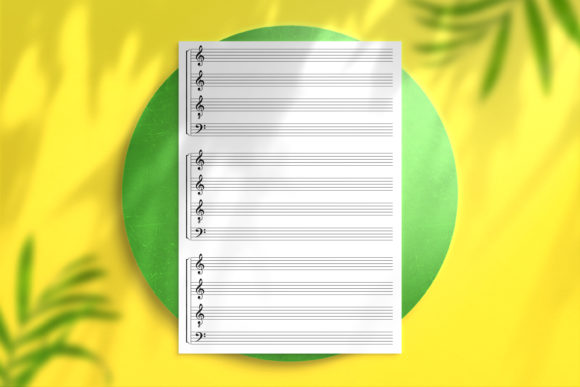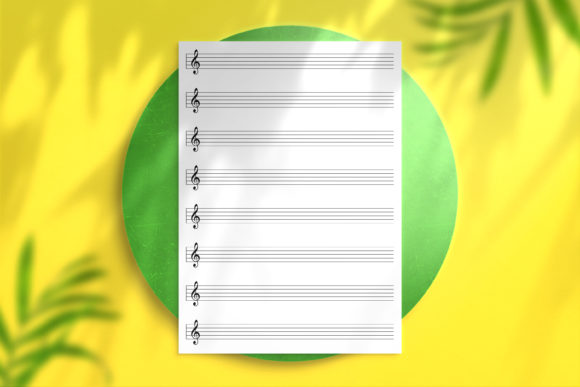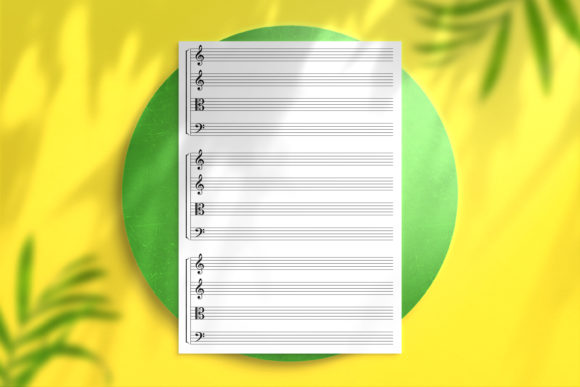
Music Paper Staff String Quartet Score: Integrating Specialized Templates into Composition and Publishing Workflows
For composers, arrangers, and independent publishers, the transition from a musical idea to a polished, performance-ready score requires more than just creative inspiration; it demands rigorous organizational infrastructure. The Music Paper Staff String Quartet Score serves as this foundational layer, bridging the gap between abstract composition and tangible production. Unlike generic manuscript paper, a dedicated string quartet template accounts for the specific vertical spacing, brace grouping, and readability requirements of four-part string writing. When integrated correctly into a workflow, these pre-formatted resources reduce administrative friction, allowing creators to focus on voice leading and texture rather than page layout mechanics.
This resource is designed for professionals and hobbyists who operate at the intersection of artistry and logistics. Whether you are drafting an original work, arranging pop music for chamber ensemble, or preparing low-content books for commercial platforms like Amazon KDP, understanding the technical specifications and practical applications of these scores is essential for maintaining quality and efficiency.
Technical Specifications and Format Versatility
A critical aspect of any publishing or composition workflow is format compatibility. The Music Paper Staff String Quartet Score product files address this by providing distinct variations optimized for different end goals. Understanding when to deploy each size prevents costly reformatting errors later in the production cycle.
- Letter Size (8.5×11 in): This is the industry standard for North American orchestral and chamber music parts. It offers maximum staff width, making it ideal for complex passages with dense notation or extensive performance markings. For KDP users targeting the US market, this size aligns with standard printing trim sizes without requiring scaling adjustments.
- Half Letter (5.5×8.5 in): Often used for study scores or portable editions, this format reduces paper costs and creates a more intimate reading experience. It is particularly useful for educational publications or composer sketchbooks where portability matters more than expansive visual real estate.
- A4 (210×297 mm): The international standard for classical music publishing outside of North America. If your distribution strategy includes European markets or international digital downloads, A4 ensures your work meets global archival and performance expectations without awkward margins.
- A5 (148×210 mm): Compact and efficient, A5 is frequently utilized for pocket scores or supplementary teaching materials. In the context of KDP, this size works well for niche theory workbooks or condensed arrangement collections.
All formats feature high-resolution black ink on white backgrounds, ensuring crisp reproduction whether printed at home, through a professional bindery, or via print-on-demand services. The 100-page bulk file specifically caters to those creating comprehensive manuscripts or commercial journals, eliminating the need to duplicate single pages manually.
Pre-Production Planning and Structural Organization
Before a single note is engraved in notation software, the Music Paper Staff String Quartet Score functions as a planning tool. Many composers find that jumping directly into Sibelius, Dorico, or Finale can lead to premature fixation on playback rather than structural integrity. Using a physical or PDF-based staff template allows for macro-level planning.
During this phase, creators use the score to map out formal sections, harmonic rhythm, and textural density across the four voices. Because the template already displays the correct instrument order (Violin I, Violin II, Viola, Cello) and proper bracing, the arranger can visualize balance issues immediately. For example, seeing the vertical alignment on paper helps identify if the viola line is consistently buried in the same register as the cello, prompting early voicing adjustments. This analog or hybrid planning stage significantly reduces revision time during the digital engraving process.
Integration with Digital Engraving and Notation Software
While modern notation software is powerful, setting up a new document with perfect margins, staff distances, and system breaks is time-consuming. These templates serve as reference guides or direct import assets depending on your software’s capabilities.
For users importing PDFs as background layers, the Music Paper Staff String Quartet Score provides a locked grid that ensures consistent spacing. This is invaluable for educators creating custom worksheets or for arrangers tracing over existing layouts to maintain uniformity across a multi-movement work. For those working entirely digitally, the template acts as a style guide. By matching the margin widths and system separation found in the template, you ensure your digital output looks professionally published rather than default-generated. This consistency builds trust with performers and conductors who rely on standardized visual cues for sight-reading.
Commercial Application: KDP and Print-on-Demand Readiness
For entrepreneurs and self-publishers, the "Ready Commercial Use" and "Ready KDP upload" designation transforms this asset from a simple utility into a revenue-generating product. However, successful implementation requires adherence to platform-specific technical standards.
The 100-page Letter-size file is pre-configured to meet Amazon KDP’s interior requirements for standard black-and-white ink. To integrate this smoothly into a publishing workflow, consider the following execution steps:
- Verify Bleed and Margins: Even though the file is labeled ready, always cross-reference with KDP’s current margin calculator based on your final page count. Gutter space for a 100-page book differs from a 24-page booklet.
- Create Value-Added Content: A blank staff book has limited market appeal. Enhance the product by adding instructional headers, chord progression charts, or analysis prompts specific to string quartet writing. This positions the book as an educational resource rather than mere stationery.
- Metadata Optimization: When listing, accurately describe the interior. Specify that it is formatted specifically for string quartets, not general music paper. This specificity targets buyers searching for niche chamber music resources and reduces return rates due to mismatched expectations.
- Proof Copy Validation: Always order a physical proof before enabling live sales. Check that the staff lines are dark enough for pencil notation but light enough to remain unobtrusive. Verify that the binding gutter does not obscure the inner barlines of the quartet score.
Educational and Pedagogical Implementation
Music educators and theory instructors utilize these scores to teach scoring techniques that generic manuscript paper cannot support effectively. The fixed instrumentation forces students to confront the realities of writing for four distinct voices simultaneously.
In a classroom or private lesson setting, the A4 or Letter templates facilitate assignments focused on voice independence and range awareness. Because the staves are grouped correctly, students develop muscle memory for proper score layout. Teachers can also use the Half Letter or A5 versions for quick dictation exercises or homework assignments that are less intimidating than full-size orchestral scores. The availability of multiple sizes allows educators to differentiate materials based on student age, skill level, or specific learning objectives without spending hours reformatting documents.
Workflow Efficiency and Quality Control
Consistency is the hallmark of professional output. Using a standardized Music Paper Staff String Quartet Score across projects establishes a cohesive brand identity for publishers and a reliable working environment for composers. When every project starts with the same parameters, cognitive load decreases. You stop thinking about how wide the margins should be and start thinking about the counterpoint between the second violin and viola.
Quality control becomes streamlined when benchmarks are established. If you are managing a team of copyists or collaborating with other arrangers, providing this template as the master file ensures all deliverables match visually. This eliminates the back-and-forth communication regarding formatting preferences and accelerates the path from draft to final delivery. For solo practitioners, it serves as a personal quality checkpoint; if your handwritten sketch deviates significantly from the template’s proportions, it may indicate that your notation is becoming too crowded or sparse, signaling a need for layout adjustment before engraving.
Long-Term Asset Management and Archiving
Treat these templates as permanent assets within your digital library. Organize them clearly by size and intended use case so they are retrievable during high-pressure deadlines. Maintaining a master folder structure such as "Templates > Chamber Music > String Quartet > [Size]" prevents version confusion. Over time, you may create derivative versions with customized title blocks or copyright footers; keeping the original clean source files ensures you can always revert to the baseline standard.
Ultimately, the value of the Music Paper Staff String Quartet Score lies in its ability to remove technical barriers from the creative and commercial process. By selecting the appropriate format for your specific goal—whether that is composing a new work, teaching scoring fundamentals, or publishing a niche workbook—you leverage professional-grade infrastructure that supports both artistic excellence and business viability. The result is a smoother workflow, higher quality outputs, and a more sustainable practice for anyone working within the string quartet idiom.