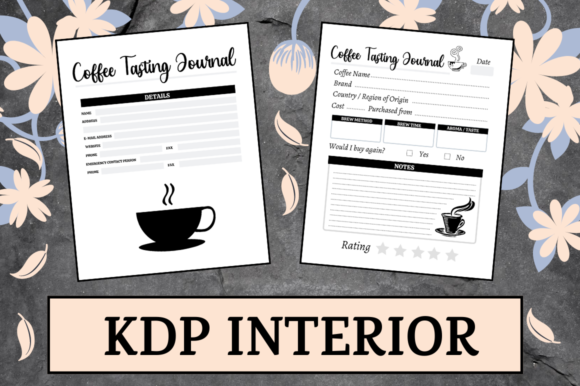
Coffee Tasting Journal KDP Interior: A Ready-to-Upload Solution for Low Content Publishers
Creating a successful low-content book on Amazon KDP often comes down to the quality and specificity of the interior. For publishers targeting the specialty coffee niche, a generic notebook simply does not convert as well as a structured tool designed for sensory evaluation. The Coffee Tasting Journal KDP Interior serves as this specialized framework, offering a pre-formatted, 120-page layout that transforms a blank canvas into a functional cupping log. This resource is specifically engineered for creators who want to bypass the design phase and move directly to publishing, providing three distinct PDF variants to test different market preferences without additional design work.
Bridging the Gap Between Hobbyist and Professional Documentation
The primary value of this interior lies in its ability to standardize the coffee tasting experience. When you upload this file, you are not just selling paper; you are selling a system for recording flavor notes, acidity levels, body, and aftertaste. In real-world scenarios, this distinction matters immensely. Consider the home barista who has recently invested in an espresso machine or a V60 setup. They often struggle to articulate why one brew tastes better than another. A lined journal offers no guidance, but this structured interior prompts them to evaluate specific attributes consistently. By providing fields for roast date, grind size, water temperature, and brew method, the journal turns subjective sipping into objective data tracking.
For KDP sellers, this utility translates to better keyword targeting and customer satisfaction. Buyers searching for "coffee cupping log" or "barista training notebook" have high intent. They are looking for a tool that solves a documentation problem. Because this interior is formatted at 8x10 with no bleed, it maximizes the writable area while maintaining safe margins for binding. This technical precision ensures that when a customer receives their printed copy, the content is perfectly centered and usable, reducing the likelihood of negative reviews related to formatting errors.
Diverse Use Cases Across the Coffee Ecosystem
While the end-user might be a solo enthusiast, the potential audience for books created with this Coffee Tasting Journal KDP Interior extends across several distinct segments. Understanding these micro-niches helps in crafting better metadata and ad copy.
- Café Staff Training: Small independent cafes often lack the budget for proprietary software or expensive printed manuals. Managers frequently purchase low-cost journals from KDP to create uniform tasting logs for new hires. This allows staff to calibrate their palates against the head barista’s standards using a consistent format.
- Coffee Subscription Reviewers: Content creators and bloggers who review monthly coffee subscriptions need a reliable way to track dozens of beans over time. This journal provides the archival structure necessary to compare a light roast Ethiopian Yirgacheffe received in January against a similar profile received in June.
- Q Grader Students: Individuals studying for Q Grader certification require rigorous practice in identifying defects and scoring cups. While official forms exist for exams, students need affordable practice books for daily repetition. This interior mimics professional cupping protocols sufficiently for study purposes.
- Roastery Quality Control: Micro-roasters sometimes use physical journals as a backup to digital systems for batch profiling. Having a tangible record of how a specific green bean lot performed during sample roasting can be invaluable when troubleshooting production runs later.
Leveraging the Three Variant Strategy
A significant advantage of this specific package is the inclusion of three different PDF variants. In the low-content business model, testing is everything. Different audiences respond to different visual hierarchies. One variant might feature a minimalist, clean aesthetic suitable for modern third-wave coffee shops, while another might utilize a more rustic, vintage design appealing to traditionalists or gift buyers. The third could offer a highly technical layout with expanded space for brewing parameters and extraction yields.
This variety allows you to adopt a portfolio approach rather than relying on a single product. You can publish all three versions under different titles or subtitles to capture broader search traffic. For example, one version can be positioned as a "Specialty Coffee Cupping Notebook," another as a "Home Barista Brew Log," and the third as a "Coffee Flavor Tracker." Since the files are already tested and formatted for KDP, the marginal effort to launch these additional assets is near zero. This strategy also mitigates risk; if one design style fails to gain traction, the others may still perform well, stabilizing your overall revenue stream.
Technical Specifications and Print Readiness
One of the most common friction points for KDP publishers is formatting rejection or poor print quality due to margin violations. This Coffee Tasting Journal KDP Interior eliminates that anxiety through strict adherence to platform requirements. The 8x10 trim size is a sweet spot for journals; it is large enough to accommodate detailed tasting wheels and writing prompts without feeling cumbersome, yet compact enough to fit on a kitchen counter or café table. The no-bleed specification is particularly strategic for this category. Unlike art books or children's coloring books, a functional journal benefits from generous white space and clear gutters. No-bleed interiors are generally faster to approve and less prone to trimming variations that could cut off critical text near the edge.
The 120-page count is another deliberate choice. It strikes a balance between perceived value and production cost. A thinner book might feel insubstantial to a buyer paying premium prices for a niche tool, while a thicker book increases printing costs and reduces royalty margins. At 120 pages, the journal offers enough capacity for months of daily brewing or years of occasional cupping sessions, justifying a higher price point while keeping manufacturing expenses manageable.
Considerations for Market Positioning
While having a ready-made interior accelerates production, success still depends on how you present the product. Because this is a pre-made asset, differentiation must occur through your cover design and marketing angle. Avoid using generic stock photos of coffee beans that look identical to every other competitor. Instead, consider custom typography or illustrations that reflect the specific variant of the interior you are using. If the interior focuses on espresso dialing-in, your cover should signal technical precision. If it focuses on sensory description, a warmer, more organic cover design may be appropriate.
It is also important to manage expectations regarding customization. Since these files are ready-to-upload PDFs, they cannot be easily edited without source files. This means you are committing to the existing layout. Before uploading, download the preview file and print a test page at actual size. Verify that the writing lines are spaced appropriately for handwriting and that the prompt text is legible. While the files are tested for KDP compliance, personal verification ensures the user experience matches your brand standards. Additionally, check the current KDP guidelines regarding duplicate content. While using a licensed commercial-use interior is permitted, adding unique value through your cover and description is essential to avoid being flagged as spammy duplicate content.
Maximizing Utility for the End User
To truly serve the adult demographic aged 20–50 who are seeking practical tools, consider how the journal integrates into their broader coffee journey. This age group often values mindfulness and ritual. Coffee tasting is increasingly viewed as a meditative practice similar to wine tasting or tea ceremonies. Your product description and A+ content should highlight this experiential aspect. Emphasize that the journal is not just about recording data, but about slowing down and engaging fully with the morning ritual.
Furthermore, think about cross-promotion opportunities. This journal pairs naturally with other low-content products like recipe cards, pantry inventory trackers, or meal planners. Customers interested in documenting their coffee intake are often interested in organizing other aspects of their culinary life. Building a cohesive brand around kitchen organization and food appreciation can lead to higher customer lifetime value. The Coffee Tasting Journal KDP Interior acts as an excellent entry point into this ecosystem because of its passionate, dedicated user base. Once a customer trusts your journal for their expensive specialty beans, they are more likely to trust your other organizational tools.
Ultimately, this resource removes the technical barriers to entry in a profitable niche. By handling the formatting, pagination, and structural design, it frees you to focus on what actually drives sales in the low-content space: market research, cover design, and understanding the specific needs of coffee lovers. Whether targeting aspiring professionals or dedicated hobbyists, the structured nature of this interior provides the tangible utility that separates bestselling tools from forgotten notebooks.