Workout Log Book KDP Interior: Strategic Asset Selection for Low Content Publishers
Selecting the right interior template is often the single most critical decision in a low or no-content publishing business. While cover design attracts the initial click, the interior dictates customer satisfaction, review velocity, and long-term brand equity. A professionally structured Workout Log Book KDP Interior serves as more than just lined paper; it is a functional tool that solves a specific problem for the end-user. For publishers targeting the fitness niche, understanding the strategic implications of interior design, trim size, and file variation is essential for building a sustainable catalog rather than a collection of disposable commodities.
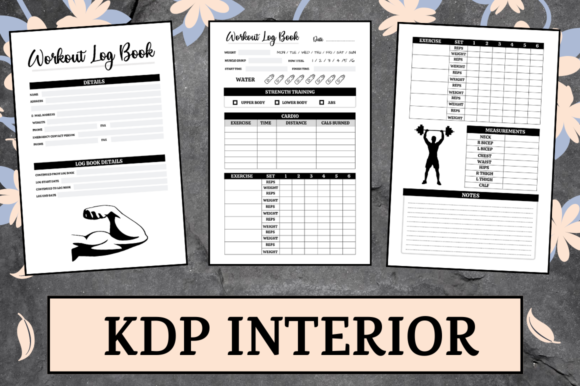
The specific asset described here—a 120-page, 6x9 inch, no-bleed interior with four distinct PDF variants—represents a calculated approach to product development. This configuration balances production efficiency with user utility. By offering multiple variants within a standardized framework, publishers can test market preferences without incurring significant additional design costs. This article explores how to leverage this specific Workout Log Book KDP Interior to enhance operational efficiency, improve market positioning, and deliver genuine value to fitness enthusiasts.
Strategic Utility of Standardized Interiors
In the context of Amazon KDP, standardization is a lever for scalability. A 6x9 trim size with no bleed is the industry sweet spot for workout journals. This dimension offers enough surface area for detailed logging while remaining portable enough for gym bags. More importantly, the "no bleed" specification reduces printing costs and minimizes the risk of formatting errors during the upload process. When you utilize a pre-formatted Workout Log Book KDP Interior that adheres to these specifications, you are effectively outsourcing the technical compliance aspect of publishing.
This allows you to redirect cognitive resources toward higher-value activities such as keyword research, cover design differentiation, and advertising strategy. The inclusion of 120 pages is equally strategic. It provides approximately three to four months of tracking if used daily, or six months for alternate-day training. This duration aligns with typical fitness transformation cycles, making the book feel like a complete program rather than an arbitrary stationery item. Understanding these physical parameters helps you position the product not as a generic notebook, but as a dedicated companion for specific fitness goals.
Leveraging Variants for Market Testing
The availability of four different PDF variants transforms a single asset into a testing laboratory. Many publishers make the mistake of assuming they know exactly what layout a customer wants. In reality, fitness tracking is highly personal. Some users prefer minimalist tables for high-volume data entry, while others need space for subjective notes on mood, sleep, and nutrition. By utilizing the four variants included in this Workout Log Book KDP Interior package, you can adopt a data-driven approach to product development.
- A/B Testing Covers: Use two different layouts with similar cover aesthetics to determine if the interior structure influences conversion rates.
- Niche Segmentation: Assign specific variants to distinct sub-niches. One variant might be marketed toward powerlifters focusing on sets and reps, while another targets yoga practitioners needing space for mindfulness reflection.
- Price Elasticity Analysis: Test whether a more complex interior variant justifies a higher price point compared to a simpler version.
- Review Correlation: Monitor feedback to see which variant generates positive comments regarding usability versus complaints about wasted space.
This method moves your business beyond guesswork. Instead of creating new interiors from scratch for every idea, you maximize the ROI of a single, tested asset by deploying it strategically across different customer avatars.
Aligning Interior Design with User Intent
A common failure point in low-content publishing is the misalignment between the interior’s functionality and the target audience's actual workflow. Before uploading any Workout Log Book KDP Interior, you must validate that the fields provided match the mental model of your specific user. A log book designed for bodybuilders will fail if marketed to runners, regardless of how beautiful the cover is. Strategic use requires you to audit the four variants against real-world use cases.
Consider the cognitive load of the user during a workout. They are fatigued, distracted, and time-constrained. An effective interior minimizes friction. If the variant you choose has small text boxes or confusing headers, it creates friction that leads to abandonment. Conversely, a well-designed layout acts as a prompt, guiding the user through their tracking habit. When evaluating these interiors, ask yourself: Does this layout support the user's goal, or does it merely occupy space? The best interiors function as silent coaches, reinforcing consistency through intuitive design.
Operational Efficiency and Quality Assurance
For entrepreneurs and small business owners, time is the scarcest resource. Creating a KDP-compliant interior from scratch involves setting margins, calculating gutter widths, ensuring safe zones, and exporting print-ready PDFs. Errors in this process result in rejected uploads or, worse, printed books with unusable margins. Utilizing a pre-tested Workout Log Book KDP Interior eliminates this technical debt.
However, "ready to upload" does not mean "upload blindly." You should still perform a final quality check. Download the proof copy or use the digital previewer to verify that the no-bleed settings render correctly on your chosen cover dimensions. Ensure that the page count (120) matches your metadata exactly. This diligence protects your account health. Amazon’s algorithm favors publishers with low error rates and high customer satisfaction. By treating this asset as a professional component rather than a shortcut, you maintain the integrity of your publishing imprint.
Risks of Context-Free Implementation
While a pre-made Workout Log Book KDP Interior offers significant advantages, relying on it without strategic context introduces risks. The primary danger is commoditization. If you use the default variant without modification or unique positioning, you are likely competing directly with dozens of other sellers using the same asset. This leads to price wars and diminishing margins.
To mitigate this, you must add value through context. This does not necessarily mean altering the PDF files. Value can be added through the product description, A+ Content, and backend keywords. Explain how to use the specific variant you have selected. Create a narrative around the tracking method. For example, if one variant focuses on progressive overload, write copy that educates the buyer on the principles of progressive overload. This bridges the gap between a generic template and a specialized solution.
Another risk is ignoring seasonal trends. Fitness interest peaks in January and early autumn. Deploying all four variants simultaneously without a promotional calendar wastes potential. Strategically stagger your releases. Launch the most comprehensive variant during peak season to capture maximum volume, and introduce niche-specific variants during off-peak periods to maintain steady sales velocity. This pacing prevents cannibalization and keeps your catalog fresh in the algorithm’s eyes.
Decision Framework for Variant Selection
When faced with four distinct options, decision paralysis can set in. Use the following framework to select the appropriate Workout Log Book KDP Interior for your next project:
- Identify the Primary Metric: What is the user trying to measure? Is it weight lifted, distance run, calories burned, or flexibility gains? Select the variant where this metric is the visual focal point.
- Assess Writing Space Ratio: Analyze the balance between structured fields and freeform space. High-intensity interval training (HIIT) users often need less writing space per session than strength trainers who track rest periods meticulously.
- Evaluate Visual Density: Dense layouts appeal to analytical users who love data. Open layouts appeal to holistic users who view fitness as part of overall wellness. Match the density to your cover design’s aesthetic promise.
- Check Competitor Gaps: Search your target keywords. If the top ten results all use simple line logs, a tabular variant may offer necessary differentiation. If everyone uses complex tables, a minimalist option might capture the underserved segment.
This framework ensures your selection is driven by market intelligence rather than personal preference. Remember, your taste is irrelevant; only the customer’s willingness to pay matters.
Long-Term Brand Building Through Consistency
Sustainable success in KDP comes from building a recognizable brand, not just selling individual units. Using a consistent interior architecture across multiple titles can create a cohesive series. Even if you change covers to target different demographics (e.g., men’s strength vs. women’s pilates), maintaining a familiar internal structure builds trust. Customers who loved your previous log book will buy the next one knowing the layout works for them.
The 120-page format supports this branding strategy. It establishes a standard expectation for value. Over time, you can gather aggregate data on which of the four variants performs best across your entire catalog. This longitudinal insight is far more valuable than data from a single title. It informs future product development, helping you decide whether to commission custom interiors or continue leveraging this versatile asset. Ultimately, the Workout Log Book KDP Interior is a foundation. Your strategic decisions regarding its deployment, positioning, and iteration determine whether that foundation supports a temporary side hustle or a lasting publishing business.
Approach this asset with intentionality. Validate the specs, understand the user psychology behind each variant, and integrate the interior into a broader marketing strategy. When used thoughtfully, this ready-to-print resource accelerates your path to profitability while maintaining the quality standards necessary for long-term growth in the competitive fitness niche.